
We’ve all been there, sitting on hold with an insurance company while we wait for an agent to come on the line. It’s time-consuming and frustrating. But with insurance conversational AI, this is starting to evolve. AI is being applied in the insurance industry to make everything faster and easier.
AI can process claims, answer policy questions, and even assist you in managing your insurance. In this post, I explain how conversational AI in insurance is making the way we deal with our insurers much better. I’ll also delve into the advantages and challenges of AI and why it’s becoming a table-stakes technology for insurance companies.
What is Conversational AI in Insurance?
Chatbots and their development: How Chatbot Technology in insurance works. Today’s AI-powered chatbots for the insurance industry leverage a range of tools, including Natural Language Processing (NLP) and Machine Learning (ML), to form automated conversations. That means insurance companies can answer your questions, assist you with claims, and even handle your policy — all without a human agent.
You’re swapping text with a smart assistant that can do everything an agent can, from answering questions to filing claims.
How is Conversational AI Deployed in Insurance?
So how does AI-Powered Conversations for Insurance actually play out? Let’s break it down:
Claims Processing with Conversational AI
Filing a claim is something that can take forever, but Insurance AI Chatbots makes it quick. AI can verify the facts, evaluate the claims, or provide updates automatically. No more waiting for days. It’s quick and efficient to do the job with AI, freeing up human agents for more complicated matters.
Underwriting and Policy Management
AI-powered insurance systems build faster underwriting. “AI peeks at your data and very fast learns the risk, and says: ‘This is the good policy for you,’” he said. It can even manage things like changing your policy, updating your details, and nudges when it’s renewal time — all without requiring a human to intervene.
Customer Onboarding and Support
When you purchase an insurance policy, AI can walk you through the process. It walks you through your coverage, responds to questions, and assists you with forms. And AI insurance agents are always there for you, available 24/7 to help, so you don’t have to wait for support.
How Insurance Companies Can Benefit from Conversational AI
So, let’s explore why Natural Language AI for Insurance is such a big deal — not only for customers but also for companies:
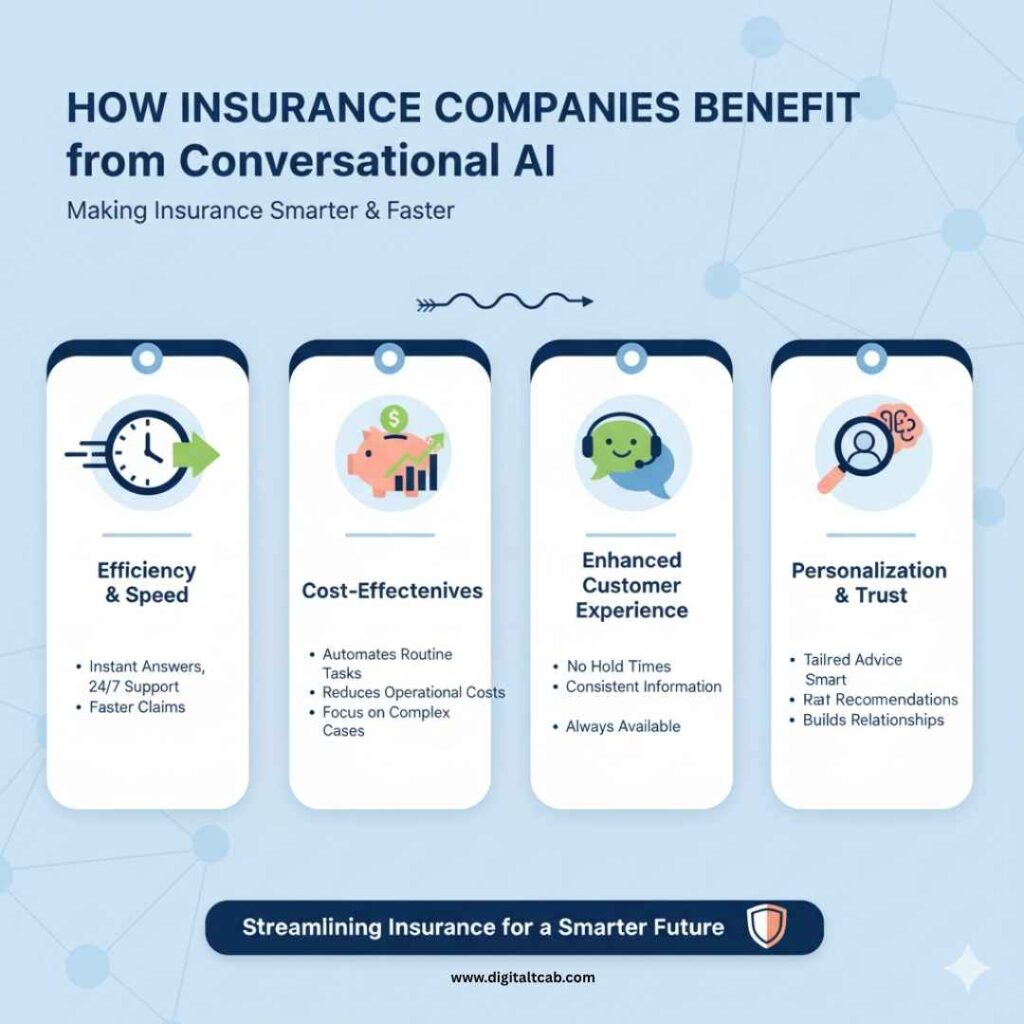
Efficiency and Speed
AI is fast. Rather than having to wait for an agent to return your call or email, insurance chatbots can provide you with immediate answers. That means quicker service for you and more efficient work for the company.
Cost-Effectiveness
An AI machine can help with routine tasks such as claims processing and policy changes, which insurance companies can use to save money. This allows the companies to concentrate their human agents on more complex work, which helps keep costs down.
Enhanced Customer Experience
With AI insurance, you don’t have to hold your hands for office hours to get help. AI is always there, so you can ask at any time of day and receive answers, all day long.
Personalization
AI learns from your data. That is, personalization: If it knows who you are and what you need, it can give you tailored advice, really focused suggestions of great coverage for your needs. The longer you use it, the better Intelligent Virtual Agent insurance becomes at understanding your needs, and that builds trust and stronger relationships.
Challenges and Considerations of Conversational AI Implementation
This kind of model has several pros and cons:
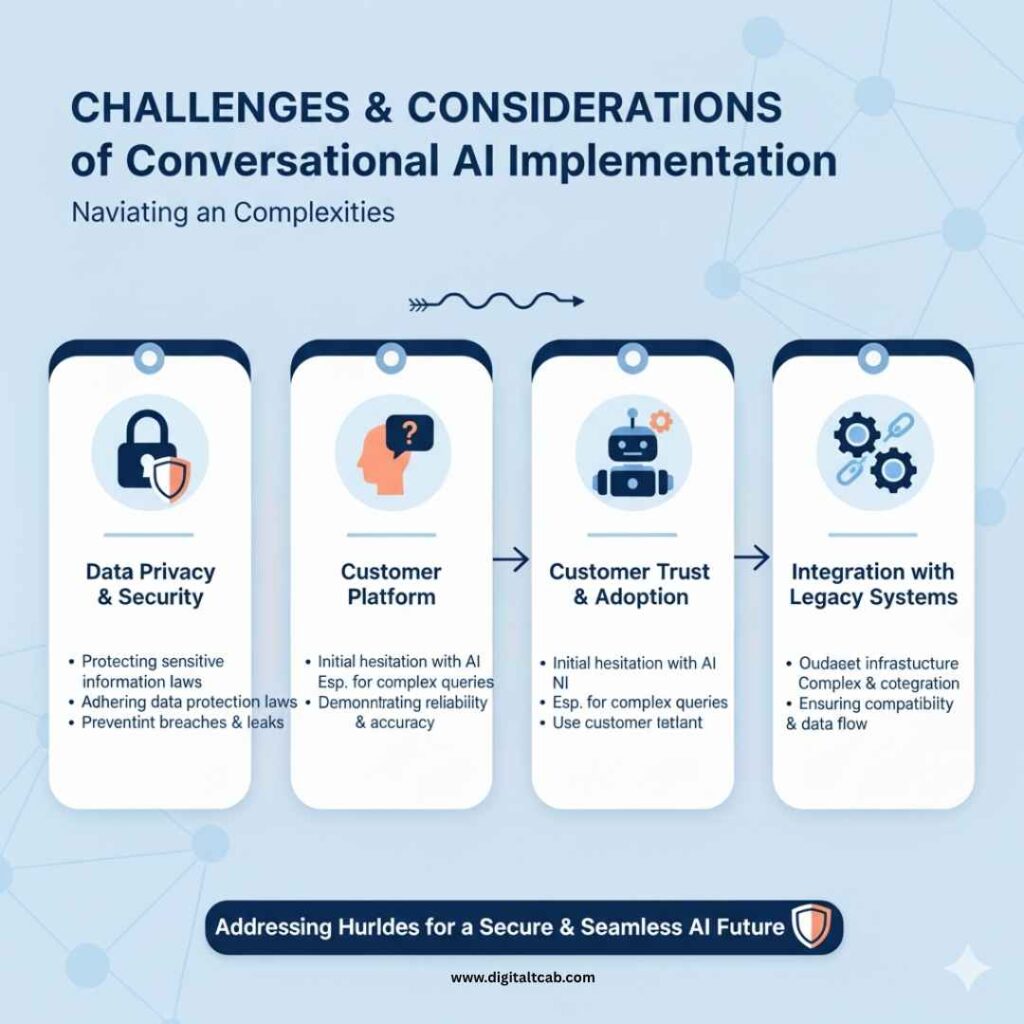
Data Privacy and Security
We’re protecting a lot of sensitive information with insurance after all, so security is huge. When developing AI insurance and conversational solutions, the security of customer data is paramount. They want to avoid breaches and need to adhere to data protection laws.
Customer Trust
Many customers remain hesitant about adopting AI, particularly for more complex questions. It can be a leap of faith to let AI handle your claims or policy changes, though. Companies also have to demonstrate that their AI systems are trustworthy and work well.
Integration with Legacy Systems
Many insurance companies rely on older systems not designed to function with AI. Integrating AI-based insurance agents with such systems can be complex and expensive, so it is essential that you have this in mind from the outset.
Conversational AI in Insurance -Real-World Examples
Here are some companies that are already implementing Dialogue System in insurance and enjoying great results:
Lemonade
Lemonade is a great example. Their AI bot “Maya” takes care of everything from enrolling for a policy to submitting claims. It applies NLP to understand what you need and provides fast and accurate responses. It’s easy, fast, and customer-friendly.
Progressive
Flo, the virtual assistant for Progressive, employs Chatbot Solutions for Insurance by aiding customers in collecting quotes and updating policies, as well as filing claims. AI is enabling Progressive to cut costs and provide better service simultaneously.
Allstate
Allstate’s AI assistant, Abby, does everything from answering questions on policies to assisting with claims. It simplifies customer service and speeds up the process. This minimizes human error and keeps things moving smoothly.
How to use Conversational AI for your Insurance business
Would you like to introduce conversational AI for insurance in your company? Here’s what you need to do:
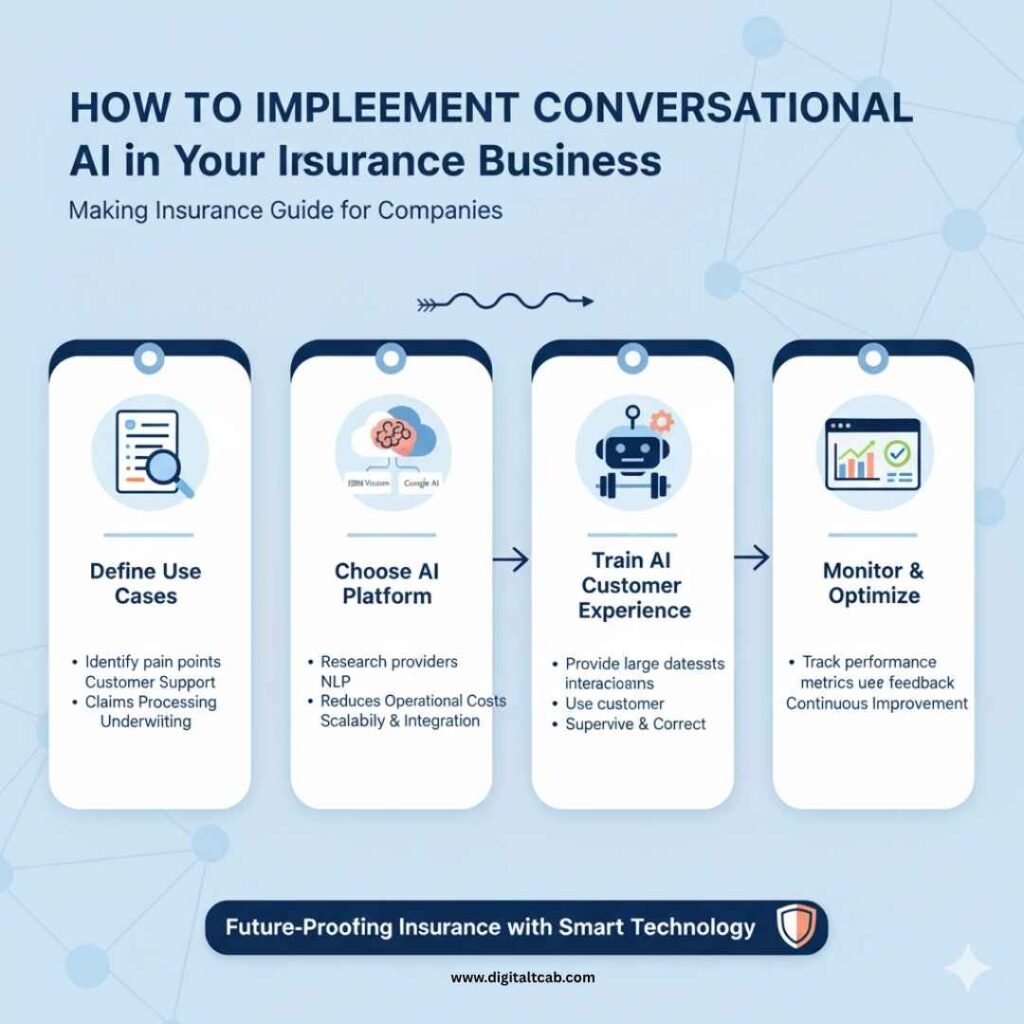
Define the Use Cases
Consider where AI can do the most good. Will it improve customer support? Help with underwriting? Or automate claims processing? Knowing your priorities enables you to pick the right tools for the job.
Choose the Right AI Platform
There are specific platforms, such as IBM Watson and Google AI, which specialize in NLP and AI-infused insurance systems. Discover the one that serves you best and makes room for growth.
Train Your AI Models
In short, AI requires data to learn and get better. Give your AI insurance agent lots of examples to learn from so it can understand what a customer needs. Train it like any muscle to keep it sharp and strong.
Monitor and Optimize
Once you have your AI up and running, monitor it. That figure might vary up or down, depending on whether it’s providing you with a great customer experience and helping your business run smoothly.
FAQs: Conversational AI in Insurance
How can CAI help expedite the claims process in insurance?
AI helps insurance agents get information verified or claims approved in a matter of seconds, compressing the entire cycle greatly.
Is Conversational AI safe to use for sensitive insurance data?
Yes, but AI systems need to adhere to strict security guidelines to protect customer data.
Can Conversational AI replace human agents in insurance?
Writing insurance is AI’s game already, but humans are still needed for the tougher stuff and service tailored to your needs.
Conclusion
How insurance is changing with it and the role of Intelligent Conversational Tools for Insurance.Email* Comments. This field is for validation purposes and should be left unchanged. AI is using NLP and ML technology to revolutionize how insurance companies engage with their customers, bringing quicker, cheaper, and more personalized service. But the potential benefits are enormous, even if it won’t be easy.
If you’re in the insurance world, Speech Recognition AI insurance isn’t optional; it’s a requirement. Begin small, use AI, and see how it changes your operations.
For further reading on how AI is transforming industries, please take a look at my articles on Conversational AI in Healthcare and Chatbot vs Conversational AI.




Leave a Reply